THE PROJECT
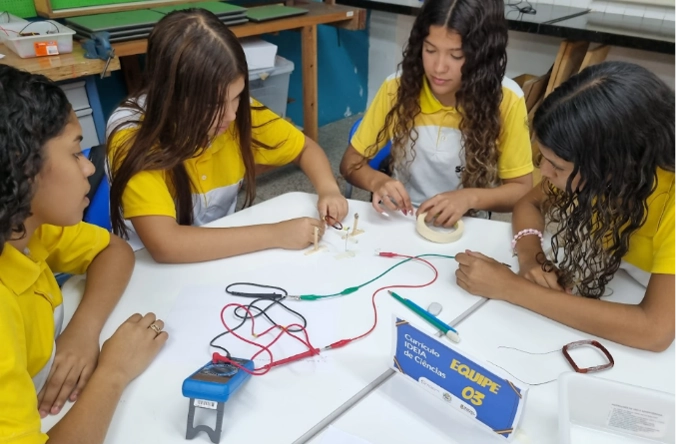
The IDEIA Project (Invention, Discovery, Investigation, and Learning) was launched in Sobral in 2017 with the goal of driving systemic transformation in science education across the municipal public school system. Throughout its implementation, the project brought together several interconnected areas of work, including the development of a new science curriculum aligned with Brazil’s National Common Core Curriculum (BNCC); the establishment and implementation of IDEIA Laboratories; ongoing professional development for teachers and teacher trainers; and the development of curriculum-aligned instructional sequences. This integrated approach sought to advance a coherent reform of science education, informed by evidence from research in science education and the learning sciences.
One of the project’s pillars was the development of a curriculum that, while aligned with the BNCC and grounded in international research on science education, was created in close collaboration with teachers from the municipal school system. Rather than serving as a stand-alone curriculum specific to Sobral, the document was designed to bring greater clarity and intentionality to instructional planning by organizing learning around big ideas, performance expectations grounded in scientific practices, and clarification statements to guide classroom implementation. This structure supports backward design and strengthens alignment among learning objectives, activities, and assessment methods.
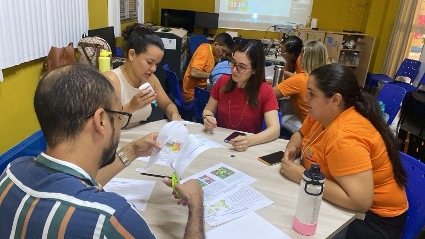
The instructional sequences were developed through an ongoing process of professional development and co-design. Initially, teachers participated in workshops that modeled the pedagogical strategies and provided feedback on the materials being developed. The training team then further developed the instructional sequences, which were brought back to the teachers for additional review and validation through an iterative refinement process. This model made it possible to produce high-quality materials while also strengthening the professional development of the participating teachers.
Another core component was the design of the professional development program, which consisted of regular in-person workshops complemented by online sessions between TLTL teacher trainers and local teacher trainers. These sessions engaged participants in the same strategies they would later use in their classrooms, thereby modeling the expected pedagogical practices. To ensure the initiative’s sustainability, the project was structured around several conditions considered essential: alignment among stakeholders across the school system; integration with official professional development programs; dedicated institutional time for teachers’ professional development; and appropriate conditions for implementing the proposed approaches in schools, including curriculum, materials, learning spaces, and support from school leadership.
The IDEIA Project is more than a collection of educational materials or professional development activities. It is an integrated strategy for educational change in which curriculum, teacher professional development, materials development, laboratories, and ongoing collaboration with the Municipal Department of Education function as interdependent components of a broader effort to achieve lasting transformation in science education.