2025
Module 1 | Cohort 3
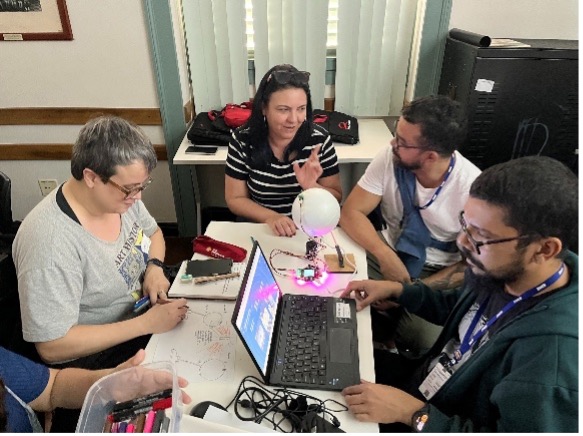
The first module for Cohort 3 marked the beginning of the professional development program for Articulating Teachers from the Technological Educational Gymnasiums (GETs), immersing participants in the principles of constructionism and in practices related to technology integration, maker culture, and instructional planning. Over the course of eleven sessions, participants engaged in hands-on learning experiences, explored digital tools, developed inquiry-based activities, and collaboratively created curriculum-aligned instructional sequences.
The program combined theoretical study, practical workshops, planning studios, collective reflection, and project development. Topics included backward design, micro, GoGo Board, artificial intelligence in education, Project-Based Learning, and pedagogical documentation. Despite logistical challenges—including the need to adapt some activities to a remote format—teacher participation and engagement remained high, resulting in an average program rating of 9.3 out of 10.
Participants’ self-reflections revealed significant shifts in their understanding of the Articulating Teacher’s role, a greater appreciation for constructionist methodologies, collaborative work, and purposeful planning, and increased confidence in implementing innovative learning experiences in the GET Collaboratories. The module concluded with a Project Showcase, during which participants presented the instructional sequences they had developed, consolidating the knowledge and skills acquired throughout the program.
Module 2 | Cohort 2
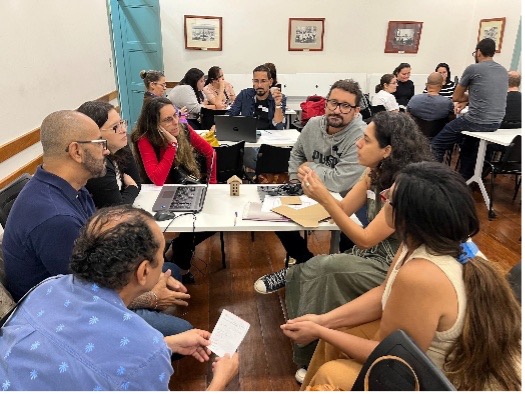
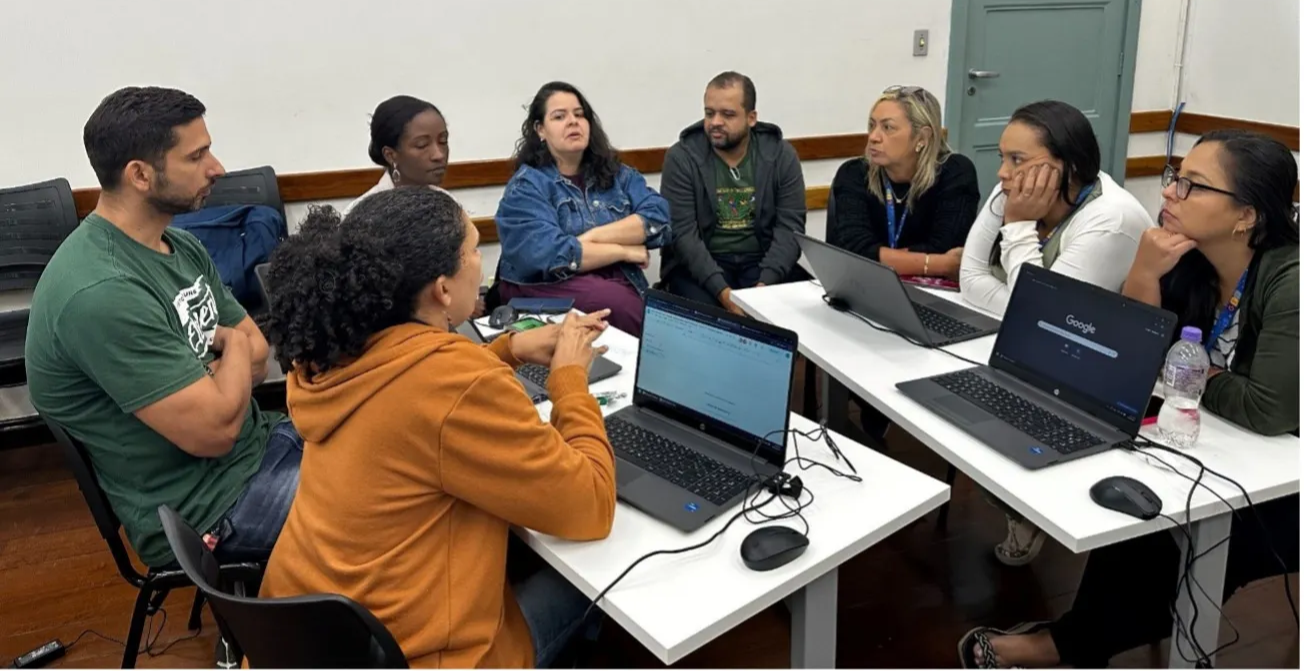
The second module of the Articulating Teachers’ (PAs) professional development program aimed to strengthen their role as trainers within their schools, supporting them in designing and delivering professional development initiatives focused on implementing the constructionist approach in the GET Collaboratories. Over the course of six in-person and remote sessions, participants deepened their understanding of strategies for designing instructional sequences, educational design principles, and processes for creating workshops and educational kits. The module culminated in the development of professional learning activities for teachers and school leaders in their schools.
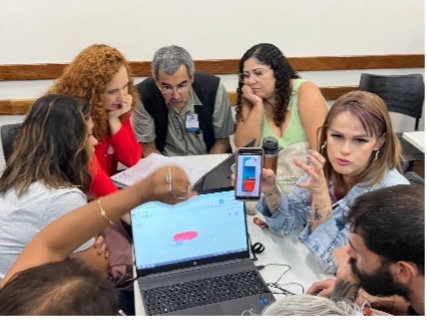
The program combined structured discussions about challenges encountered in schools with studies of Design Thinking and Universal Design for Learning, workshops on digital tools such as Scratch, Tinkercad, and Inkscape, planning studios, prototyping activities, peer feedback, and successive cycles of refinement. This process enabled participants to develop more purposeful professional learning initiatives aligned with constructionist principles and the specific needs of their school contexts.
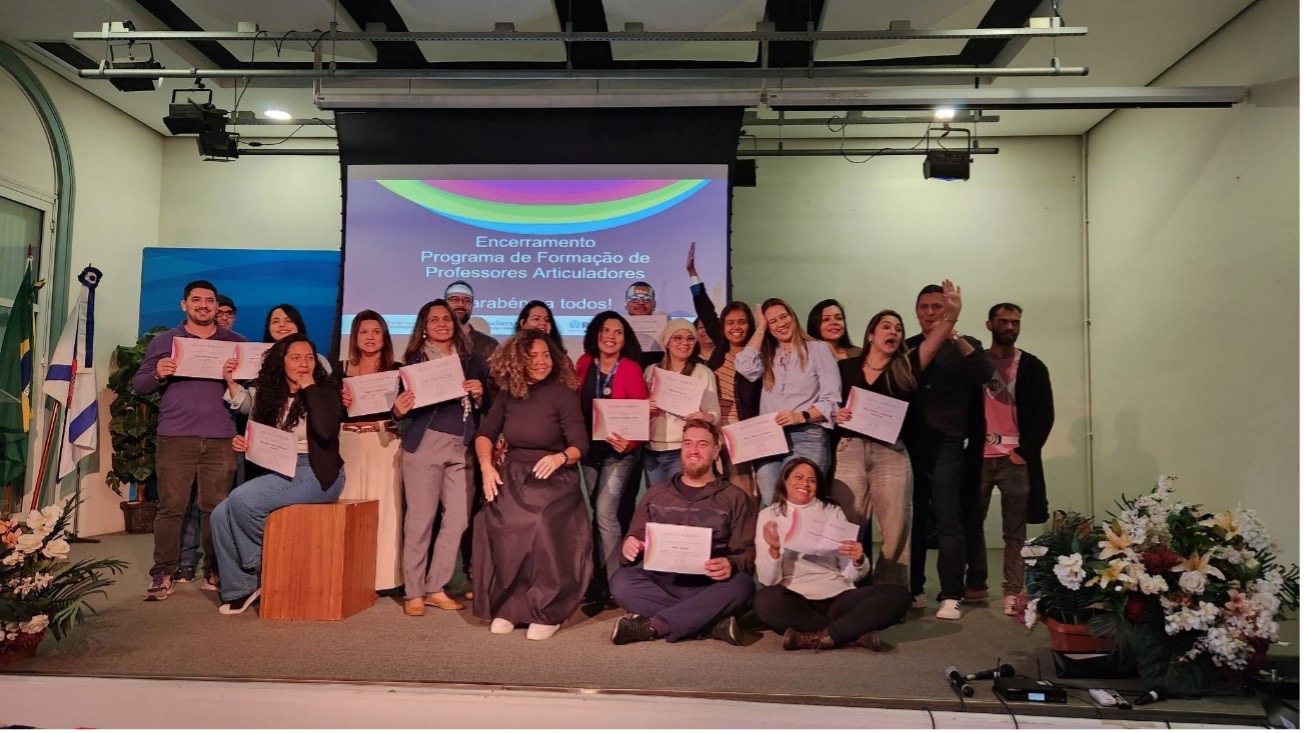
The module concluded with a Project Showcase, during which the Articulating Teachers presented the professional development initiatives they had created throughout the program. The presentations demonstrated participants’ growing command of the terminology, methodologies, and tools explored during the module. They also reinforced the Articulating Teachers’ role in disseminating a constructionist culture across the GETs while strengthening teacher agency and leadership in the ongoing professional development of their peers.
2026
In 2026, TLTL entered a new phase of its collaboration with SME-RJ, building on the results achieved in 2024–2025 and focusing on three main areas: the professional development of Cohort 4 of new Articulating Teachers (PAs); the establishment of a core group of PA Trainers to expand the school system’s professional development capacity; and support for the institutionalization of the GETs’ pedagogical principles. The program also included the development of an Integrated Planning Guide and technical support for program management, with the aim of strengthening knowledge transfer to SME-RJ and ensuring the sustainability of the public policy.
The professional development program for Cohort 4 comprised 80 hours of in-person, remote, and asynchronous activities focused on integrated planning, inquiry-based learning, the pedagogical use of technology, and project-based learning in the Collaboratories. In parallel, a dedicated program was created for PA Trainers—more experienced professionals selected from previous cohorts—to prepare them to provide professional development for PICs, pedagogical coordinators, and new PAs. They were also expected to serve as co-facilitators for Cohort 4 through an on-the-job learning model.
Due to changes in SME-RJ’s schedule, with PA Trainers assigned to schools in August and September, the program design was revised. Their professional development was rescheduled for October, and the on-the-job component was replaced with a capstone project in which participants designed and implemented a professional development activity for PICs, followed by a reflective debrief. The program also incorporated a research component—including pre- and post-program assessments, interviews, and an observation protocol—as well as regular meetings with SME-RJ, support for the selection of future GET Trainers, and the development of the Integrated Planning Guide for PICs and PAs. This reference resource articulates the principles, criteria, and strategies underlying the GETs’ constructionist approach.