The Project
In 2026, the Transformative Learning Technologies Lab (TLTL) at Columbia University partnered with SESI Rio Grande do Sul to strengthen the Hands on Bots (HOB) Program and support the creation of Robotics Clubs through a teacher professional development initiative. The project was designed to expand teachers’ and students’ access to innovative learning experiences in robotics, physical computing, and hands-on learning while contributing to the implementation of Brazil’s National Common Core Curriculum for Computing (BNCC Computing) across participating municipal school systems. By July 2026, the HOB community included 182 teachers and 1,377 students across 12 regional hubs and 55 Robotics Club classes. In this context, TLTL’s role extended beyond teacher professional development to encompass the development of educational materials, the design of missions for the Clubs and the Robotics Tournament, and ongoing mentoring to support implementation and strengthen educators’ practice throughout the program.
The initiative was organized into four complementary areas: a 24-hour in-person professional development program for accredited teacher trainers; online support during Club implementation; the development of a six-week instructional plan; and the design of tournament missions, all centered on the theme of the circular economy. Beyond teaching participants how to operate the GoGo Board, the program prepared them to use technology as a tool for investigating phenomena, collecting and analyzing data, understanding real-world problems, and developing solutions grounded in programming, robotics, and social and environmental responsibility.
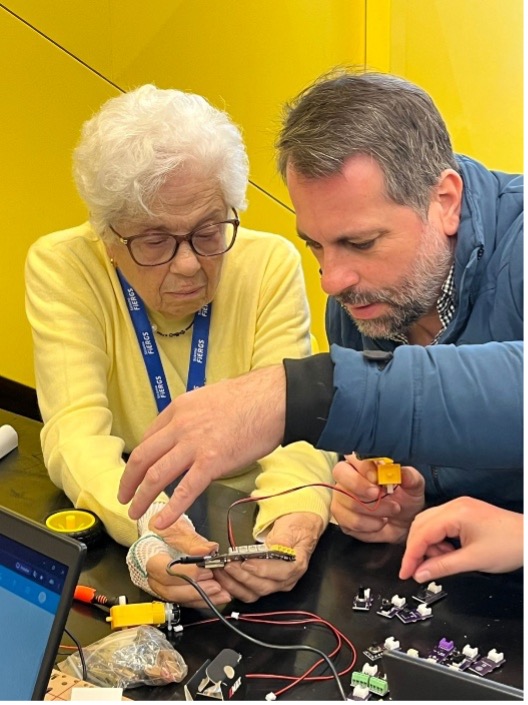
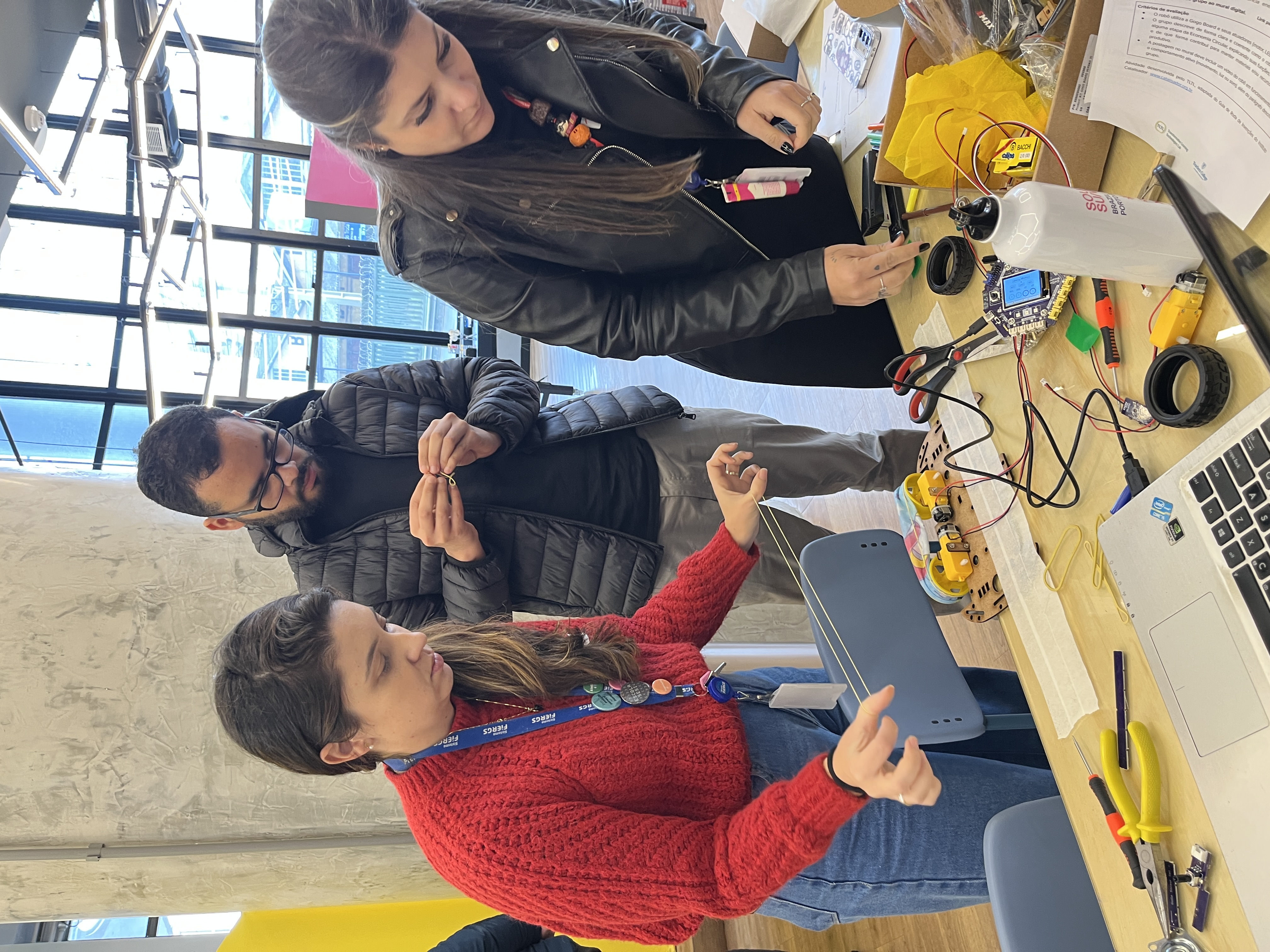
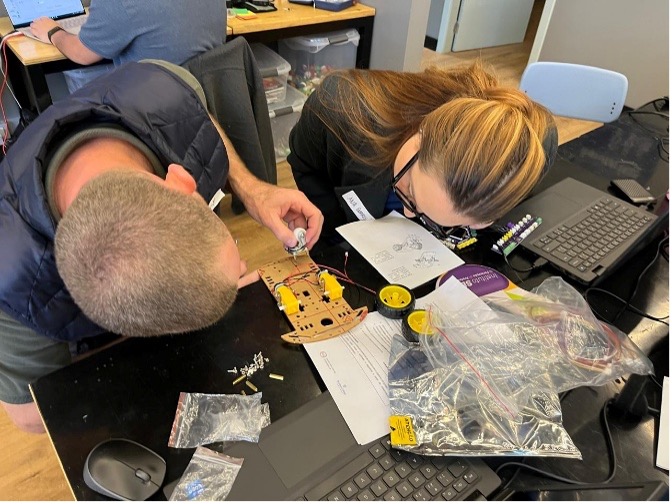
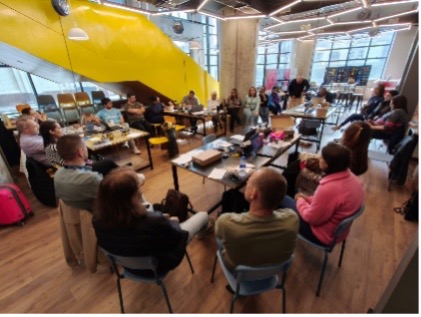
Designed by TLTL and delivered in May 2026, the teacher trainer program was guided by the principles of hands-on learning, inquiry, collaboration, the integration of technology with real-world problems, and critical reflection on the use of digital technologies. Over three in-person sessions, participants explored programming, physical computing, artificial intelligence, the Internet of Things (IoT), data collection and analysis, and solution design, all connected to challenges involving sustainability and the circular economy. The program emphasized practical experiences in which teachers engaged in the same pedagogical strategies they would later use with their students in the Robotics Clubs.
The first session introduced the program’s foundations, including the GoGo Board, its sensors and actuators, and activities involving programming and physical computing. Participants also took part in design-and-build workshops inspired by the circular economy and conducted environmental investigations using sensors to collect data in different areas of the SESI Institute. By combining anchoring phenomena, collaborative work, and data analysis, the session fostered discussion about how technology can help learners understand and address contemporary environmental challenges.
The second session explored reactive systems in greater depth through rule-based programming, light sensors, and artificial intelligence concepts introduced through Teachable Machine. Participants trained classification models, integrated AI with the GoGo Board, and reflected on automation, ethics, data quality, and the limitations of algorithms, connecting these topics to future Robotics Club activities and tournament missions.
The third session focused on integrating the knowledge and skills developed throughout the program. Participants completed missions inspired by the Robotics Tournament, applying the Internet of Things, remote communication, sensors, programming, and artificial intelligence to challenges involving environmental monitoring, reverse logistics, and urban regeneration. The session concluded with activities focused on documenting learning, collective reflection, and planning the adaptations needed to implement the Robotics Clubs in different educational contexts.
Program evaluations indicated high levels of participant satisfaction, with average ratings ranging from 9.4 to 9.9. Teachers highlighted the quality of the hands-on experiences, the organization of the sessions, the collaborative learning environment, and their increased confidence in using programming, robotics, and artificial intelligence in their teaching. These results underscore the potential of the TLTL–SESI-RS partnership to establish a sustainable model for teacher professional development and support the implementation of Robotics Clubs across municipal school systems throughout the state.